
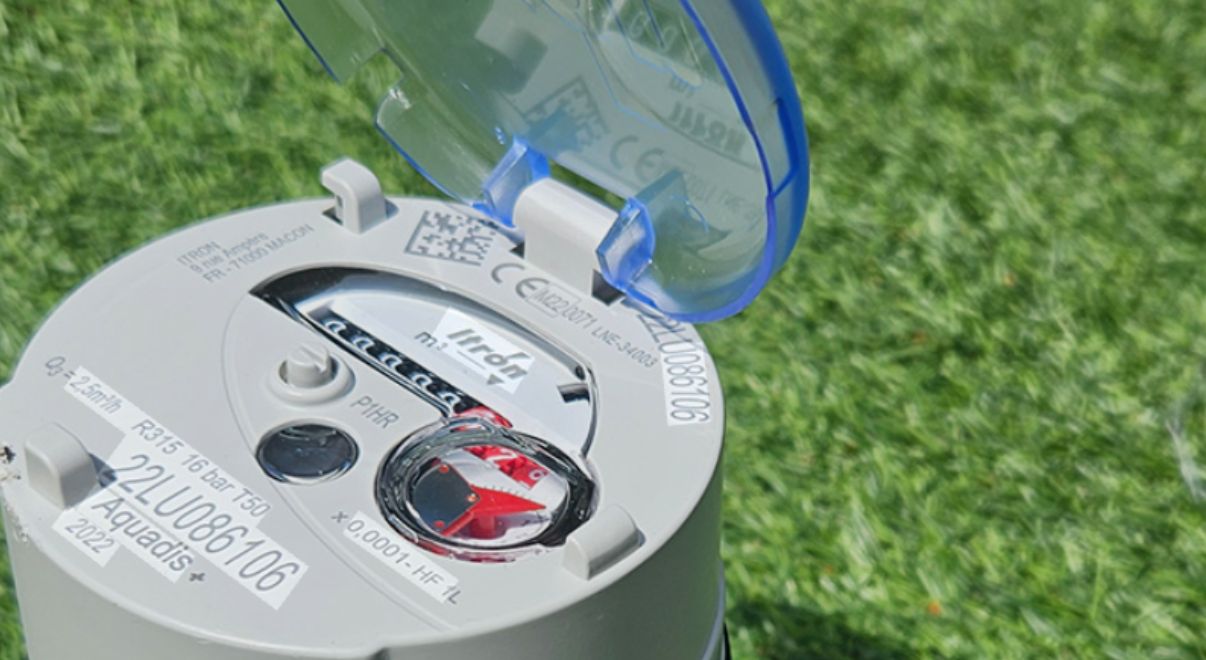
10 Million Smart Meters Are Needed…But What Happens to the Data?
We all know why we need smart meters: real-time consumption data, leak detection, a step change from estimated bills and quarterly reads to something approaching a live picture of how water actually moves through a network and a home.
All true. But there’s another question sitting underneath that we’d love to get to grips with: once the data exists, what actually happens to it?
The rollout is real. The evidence of what comes next is thinner.
The installation numbers are unambiguous. Ofwat’s PR24 final determinations committed £1.7 billion to deliver almost 10 million smart meter installations across England by 2030 – roughly 2.8 million new installs and 7.7 million upgrades. That’s a serious, at-scale change to the sector’s data infrastructure, arriving right now.
What happens after the meter goes live is less clear-cut. Ofwat’s own Water Company Performance Report for 2023-24 notes that most companies are off-track against both their funded metering targets and their water resource management plan commitments, and that no company met its performance commitment level across the 2020-25 period. That’s not a criticism of the technology – it’s a sign that installing the hardware and using it well are two different achievements, and the sector, by its own regulator’s account, is further along on the first than the second.
Independent research points the same way. A 2026 academic study on smart water meter adoption found that granular consumption data across the sector is, in the researchers’ words, mostly limited to leak detection and billing, with ‘significant untapped potential’ for it to be used more broadly in network modelling and asset management. The sensors are in. Beyond flagging obvious anomalies and generating a bill, most of that data isn’t yet doing very much.
Why the gap has a real cost
England’s water companies still lose roughly 2.4 billion litres a day to leakage across the public network alone. And a national campaign launched in July 2026 highlighted a striking perception gap: surveyed adults believed they used around 30 litres of water a day; actual per capita consumption in England sits closer to 140 litres – nearly five times higher.
Awareness campaigns exist precisely because that gap is so wide. But they’re also the kind of blunt, broadcast intervention that granular smart meter data should be making far more targeted – flagging exactly which properties, postcodes or pressure zones need attention, rather than sending the same message to everyone and hoping enough of it lands. A dataset detailed enough to identify individual leak signatures is currently being used, in most cases, to do what estimated billing and periodic surveys already did – just faster.
Some of the sector is already trying to close it
To be fair to the industry, this isn’t going unnoticed everywhere. Severn Trent, for instance, is leading an Ofwat Innovation Fund project exploring whether incentivising customers through a loyalty scheme can drive consistent water-saving behaviour – an attempt to turn consumption data into a targeted intervention rather than a blanket campaign. It’s a small-scale pilot, but the right instinct: act on what the data shows about a specific customer or network, rather than treating every property the same. On the infrastructure side, pairing meter installs with a proven, certified device like LoFlo is another example of turning access into action rather than just information.
The question the rest of the sector needs to sit with is why that instinct isn’t the default yet. The data infrastructure – meters, networks, dashboards – is being built at pace and real cost. The analytical and operational layer on top of it, the part that turns – ‘we can see consumption patterns’ into ‘we know exactly where to act and what to do once we’re there,’ is still mostly missing.
What ‘using the data’ should actually mean
Genuinely data-driven demand management isn’t a dashboard full of consumption graphs. It’s using granular data to identify which properties, streets or pressure zones are contributing disproportionately to demand or loss, then deploying proven interventions precisely there – rather than spreading a fixed budget evenly across a region regardless of where the problem actually sits.
That’s a different way of running a demand reduction programme, and on the evidence so far, one the sector has barely started to build. The meters are going in at record pace. The question worth raising at every board table and AMP8 planning meeting isn’t whether the data exists – it clearly does, and there’s about to be a lot more of it. It’s whether anyone’s built the machine to act on it yet.