
Why Putting Smart Tech Underground Is a False Economy
When planning water infrastructure, it’s natural to focus on upfront costs. Budgets are tight, timelines are shorter than ever and every decision is scrutinised. On paper, traditional underground installations – like boundary boxes housing meters and smart technology – can absolutely seem to be the economical choice.
But look a little closer and the picture’s a bit different. From access challenges to flood risk and long-term costs, burying smart technology underground is often a false economy – one that can create ongoing issues for developers, water companies and end users alike.
The Access Problem: Out of Sight, Out of Mind… and Hard to Maintain
One of the biggest drawbacks of underground installations is simple: access.
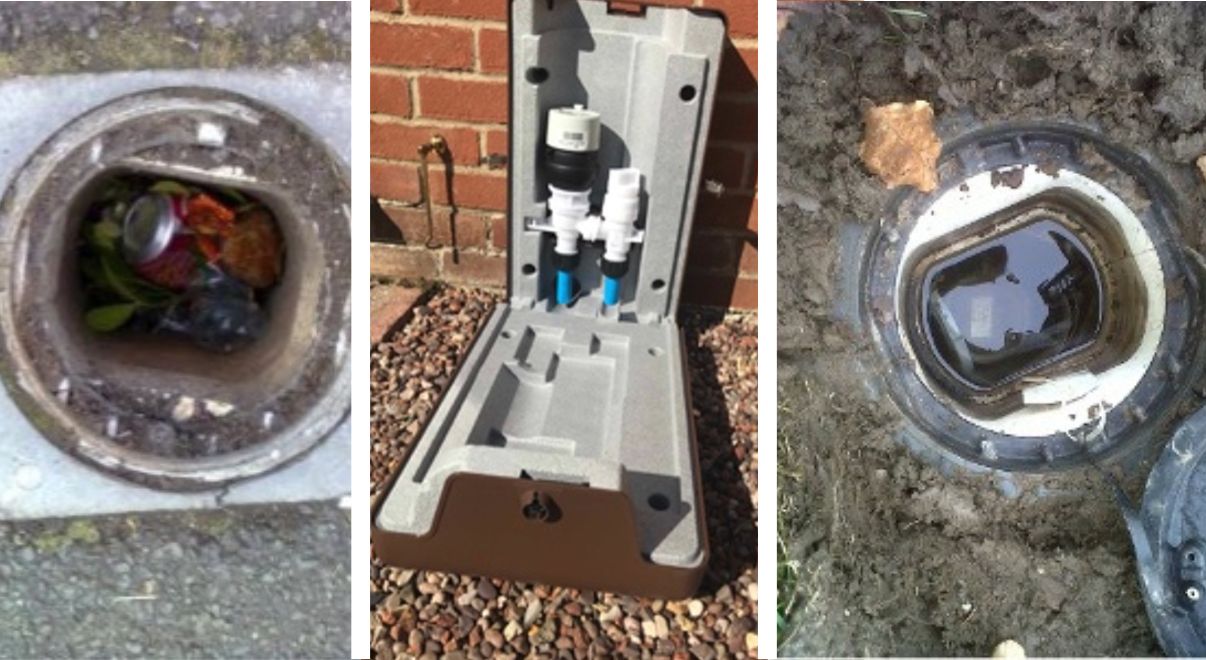
Traditional boundary boxes place critical infrastructure below ground, making it harder to inspect, maintain and upgrade. By contrast, above-ground solutions were specifically developed to simplify installation and improve access, removing the need for buried chambers altogether.
This difference matters more than it might first appear. Easy access isn’t just a convenience – it directly affects operational efficiency. When systems are difficult to reach, routine checks take longer, faults can go unnoticed and maintenance becomes reactive rather than proactive.
Groundbreaker’s approach – moving connections from the pavement to the property wall – was designed to tackle exactly this issue, improving meter access and making ongoing management far more straightforward.
In practical terms, that means fewer disruptions, faster repairs and less reliance on excavation work. Over the lifetime of a development, those efficiencies add up quickly.
Flood Risk and Data Reliability: A Hidden Weak Point
Water infrastructure and underground environments are not always natural allies.
Below-ground installations are inherently exposed to groundwater, surface water ingress and flooding. While this is a known challenge, it becomes more critical when smart technology is involved. Devices that rely on consistent performance – such as smart meters – are far more vulnerable when placed in damp, enclosed environments.
Signal reliability is another issue. As the industry moves towards smart metering and automated data collection, connectivity is essential. However, burying technology where signal strength is poor and access is awkward creates obvious limitations.
Above-ground solutions address both concerns. By positioning meters in a more stable, accessible environment, they support stronger signal transmission and more reliable data collection. In fact, locating meters above ground has been shown to provide a better environment for smart technology… extend signal transmission and allow easy meter exchange.
Put simply, if data is critical – and increasingly it is – then where you place the technology matters.
The Real Cost: Why Cheaper Upfront Often Costs More
The strongest argument against underground installations isn’t theoretical – it’s financial.
While buried boundary boxes may appear cheaper at the point of installation, their long-term performance tells a different story. Industry data shows that 53% of underground boundary boxes require rework, with each repair adding significant cost across a development.
There are also hidden costs linked to leakage. Underground systems often include joints upstream of the meter, creating potential failure points. Even small leaks can persist undetected for long periods, wasting water and increasing operational costs.
Groundbreaker’s design philosophy directly addresses these issues. By using an unjointed supply pipe and relocating infrastructure above ground, the system reduces leakage risk and eliminates many of the common failure points associated with buried installations.
When viewed through a whole-life cost lens, the difference becomes clear. What looks like a saving at the start can quickly be outweighed by maintenance, repair and inefficiency over time.
A Smarter Way Forward
Groundbreaker Systems was founded on the idea of solving overlooked challenges in water infrastructure; creating ‘better ways of doing things” that are both practical and sustainable.
Moving smart technology above ground is a perfect example of that thinking in action.
It improves accessibility.
It enhances reliability.
And crucially, it reduces long-term costs.
In an industry under pressure to deliver more efficient, future-ready systems, those benefits are hard to ignore.
Conclusion: Think Beyond the Initial Price Tag
Choosing where to place smart water technology isn’t just a technical decision—it’s a strategic one.
Underground installations may seem like the easy, low-cost option. But when you factor in access challenges, flood and reliability risks, and the cumulative cost of maintenance and rework, the equation changes.
Above-ground solutions offer a more resilient, future-proof approach—one that aligns with the growing demands of smart infrastructure and sustainable water management.
Because in the end, the smartest investment isn’t the cheapest one upfront. It’s the one that performs, reliably and efficiently, for years to come.
Ready to talk about where your SMART meters are best placed? Give us a shout.